
English| EUR
Suggested for you
More currencies
Choose a language
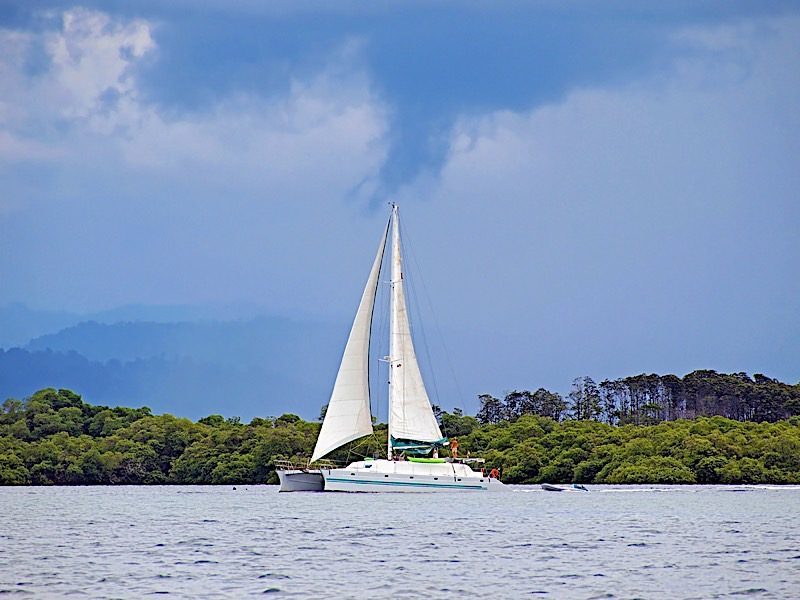
A catamaran crossing to Taboga Island is a short sail with a long day attached, and the difference between comfort and regret usually fits in one small bag. This what to bring on a catamaran cruise guide explains what the conditions actually demand: sun, salt, wind on the trampoline deck, and a volcanic-sand beach with no shops at the waterline. Read it before you leave Panama City, not while you queue at the marina.
Quick answer
Pack for sun and salt water: reef-safe sunscreen, a hat that ties on, sunglasses, a towel, swimwear worn under your clothes, water shoes, cash in small bills, and a dry bag for phones and documents. Entry to the island itself is free at 0 USD, so budget only for the cruise. Boats run within an 08:00–17:00 operating window; a light layer matters most on the windy return leg.
The channel between the Amador Causeway and Taboga Island is only about twelve nautical miles wide, yet it crosses one of the busiest shipping approaches on earth: the Pacific mouth of the Panama Canal, where anchored bulk carriers sit in rows like a floating city. Passengers on a Taboga Island catamaran tour spend the outbound leg watching that traffic slide past, which is precisely why so many of them forget they are also sitting in equatorial sun on a white deck that reflects it back upward. The Bay of Panama offers no shade unless the vessel's canopy provides it, and the trampoline netting between the hulls — the most photographed seat on any catamaran — is the least sheltered spot aboard. Understanding what to bring on a catamaran cruise starts with understanding the day's shape rather than the boat's amenities. Departure is from Fuerte Amador Resort & Marina on the Amador Causeway, and the check-in desk expects passengers well before the 9:00 sailing, with an arrival window of 08:00–09:00 leaving no room for a detour to a pharmacy. Once the lines are cast off, the island is the only resupply point, and Taboga's village shops sit uphill from the sand rather than beside it. Playa Restinga, the sandbar that links the main island to Isla El Morro at low tide, has coarse grey volcanic grit and scattered shell fragments underfoot. The tide chart governs that crossing, not the schedule, which is the single detail most day visitors learn too late. The practical implications sort themselves into three categories. Sun protection is non-negotiable: the reflected glare off Panama Bay burns skin that never sees direct light, and Taboga is a small island community where reef-safe formulations are the courteous choice near the swimming areas. Water management matters next, because salt spray reaches the seating on the return leg when the afternoon breeze builds — a dry bag or a sealed pouch keeps a phone, a passport copy and small-denomination balboa or dollar notes usable. Comfort is the third: soft-soled shoes for wet fibreglass, a light long-sleeved layer for the wind, and a towel that dries faster than a hotel bath sheet. Anyone treating the crossing as a Panama City landmarks excursion rather than a beach day should still assume they will get wet. What to bring on a catamaran cruise ultimately answers a scheduling question as much as a packing one. The island charges nothing to set foot on, so the day's cost sits entirely in the crossing and whatever lunch the village serves, and the operating window runs 08:00–17:00 daily. That leaves a generous middle stretch on the beach and a firm outer boundary on the return. Travellers who assemble their bag the night before — swimwear already on, documents sealed, cash counted — spend the morning watching Casco Viejo's skyline recede instead of hunting for a lost sandal. Detailed lists, timings, fares and directions live in the dedicated sections of this site; verify current departures directly with the operator at +50762348989 before travelling.
“The island charges nothing to set foot on — the day's cost sits entirely in the crossing.”
Pack for a half-day on open water and a rocky-sand island, ordered from what to sort out in advance to what goes in your bag on the morning of the cruise.
Prepare for the specific conditions of a catamaran deck to ensure your belongings remain secure and functional throughout the trip.
Use a dry bag rather than a standard backpack to protect electronics from salt spray and deck wash. A roll-top closure provides the most reliable seal against accidental splashes.
Keep phones and cameras in a floating wrist strap or a secure harness. If your device falls overboard, it is unlikely to be recovered from the currents around Taboga.
Leave heavy sneakers behind and opt for sandals with rubber soles that provide grip on wet fiberglass. Bare feet are often preferred on deck to maintain traction and cleanliness.
Apply sunscreen before boarding, as reapplication on a moving boat is difficult due to wind. Choose a reef-safe formula to help protect the local marine ecosystem.
Avoid loose paper items, hats without chin straps, or light clothing that may blow away. Secure all loose gear inside your bag before the boat leaves the marina at Fuerte Amador.
Catamaran cruises depart from Fuerte Amador Resort & Marina located on the Amador Causeway in Panama City. The most efficient way to reach the terminal is by taxi or car, which provides direct access to the marina entrance.
Direct to Fuerte Amador Resort & Marina
Via Amador Causeway
Route C850 to Amador
Plan to arrive between 08:00–09:00 to ensure timely check-in before the 09:00 catamaran departure. Having your booking information ready upon arrival at the marina gate facilitates a smooth boarding process.
The marina operates daily to accommodate catamaran departures for Taboga Island. Please review the schedule below to plan your arrival.
Visiting Taboga Island itself does not require an entrance fee. However, travelers planning to arrive via catamaran cruise will need to budget for separate tour operator fees.
Verdict: While island access is free, visitors should budget for catamaran cruise fees which vary depending on the selected operator and tour package.
Everything you need to know about what to bring on a catamaran cruise
When considering what to bring on a catamaran cruise, focus on essentials like high-SPF sunscreen, a wide-brimmed hat, and polarized sunglasses to protect against the tropical sun. You should also pack a change of clothes, a towel, and comfortable swimwear for your time on the beach. It is helpful to consider what to bring on a catamaran cruise to ensure you have everything needed for a day at sea. Remember to bring a waterproof bag to keep your electronics and personal items dry during the crossing.
For a typical Taboga boat tour, guests often prioritize carrying a reusable water bottle, snorkeling gear, and light, breathable clothing. As you prepare your bag, remember that what to bring on a catamaran cruise should include footwear that is easy to remove, as you may be walking on sandy shores or wet decks. Keeping your gear light and organized will help you navigate the marina and vessel more efficiently.
Plan to arrive at Fuerte Amador Resort & Marina between 08:00 and 09:00 for the best check-in experience. Arriving within this early window ensures you are prepared before the 9:00 departure. Being punctual is part of knowing what to bring on a catamaran cruise, as it allows for a smooth boarding process.
There is a 0 USD entrance fee for the island itself as it is a public destination. However, the costs associated with the boat transport are separate from any local island activities. Always verify your specific booking details through the official site to understand your transit costs.
While many tours provide light refreshments, bringing a small, personal supply of water or light snacks is often allowed and encouraged. Check the terms of your specific operator regarding outside items to ensure they meet safety regulations. Staying hydrated is vital when spending the day in the tropical climate of the Gulf of Panama.
Beyond sun protection, consider bringing a light cover-up or rash guard for when you are not swimming. The tropical environment can be intense, so having layers that provide UV protection is a smart addition to your kit. Avoid heavy bags and stick to compact items that fit easily into a daypack for maximum comfort on board.
While you should have your booking confirmation ready, having a small amount of local currency is useful for purchasing refreshments or supporting local vendors on the island. Not all beach-side facilities have card terminals, so cash provides peace of mind. Keeping your valuables in a secure, waterproof pouch is recommended throughout your stay.